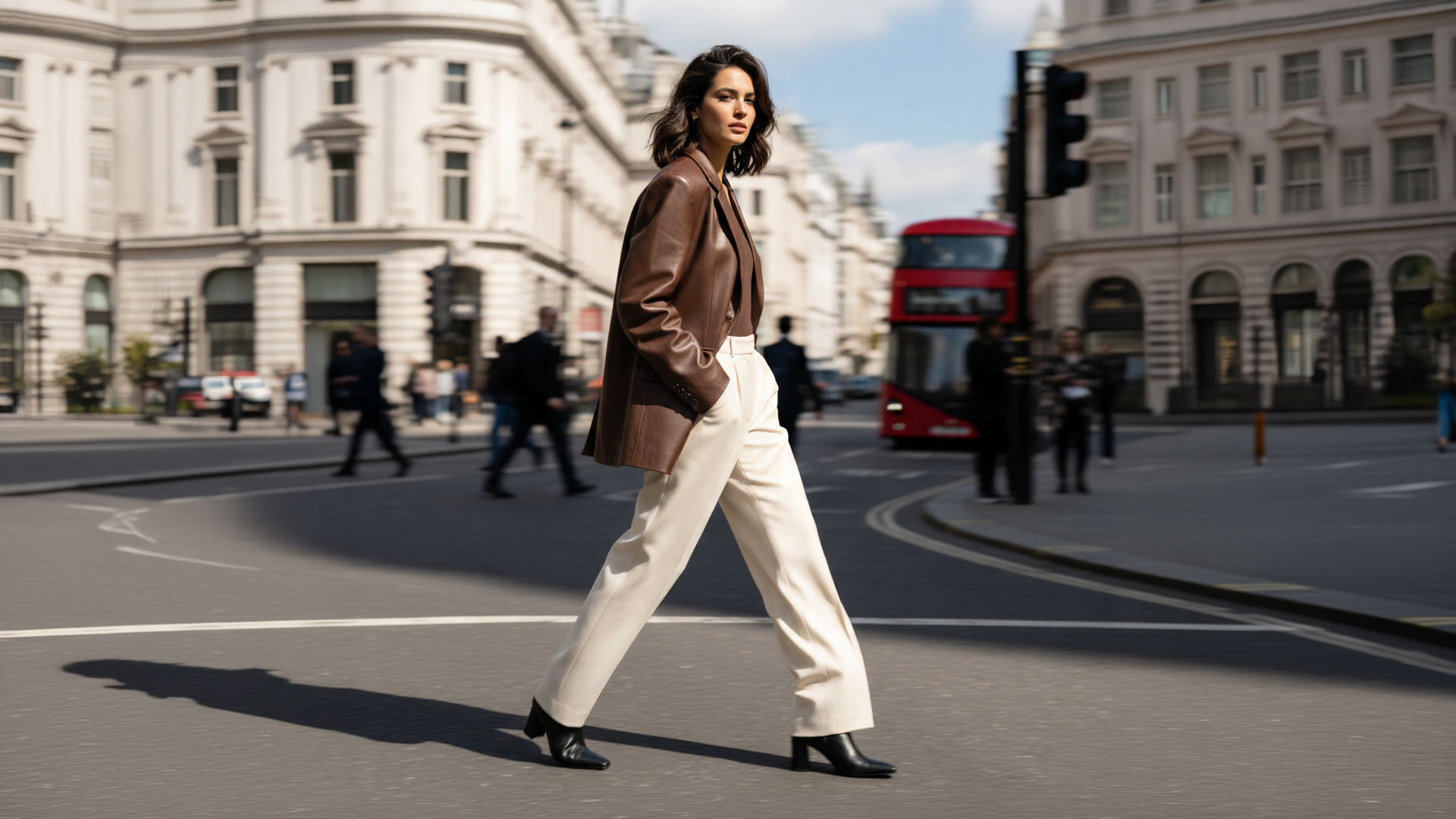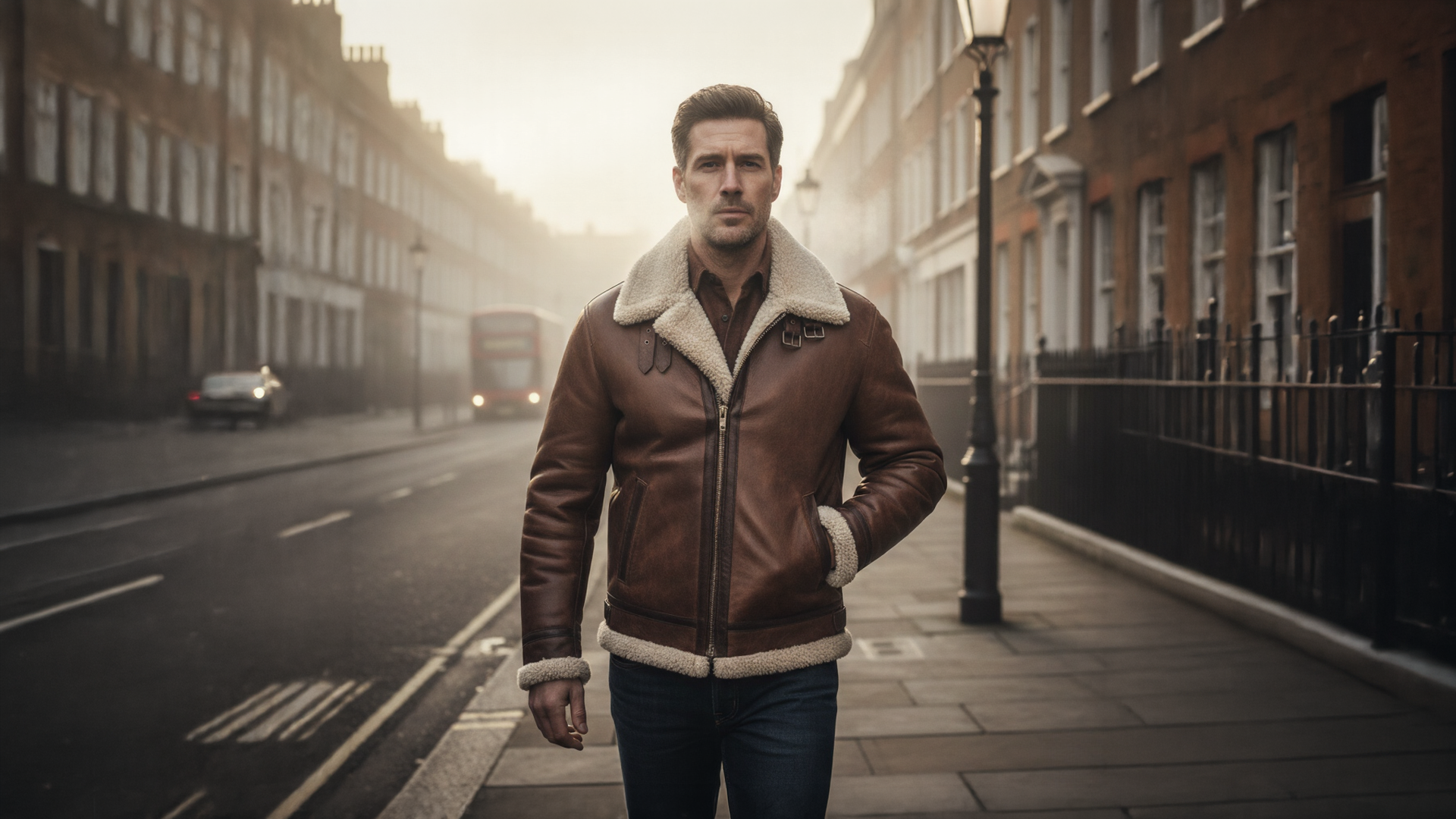

How Should a Leather Jacket Fit? Snug or Relaxed?
A brand-new leather jacket should fit snug, but never tight or restrictive. Leather naturally softens and stretches with wear, so starting with a comfortably close fit ensures it relaxes into the right shape over time. If you buy a jacket that already feels loose, it is likely to become baggy and lose structure as the leather adapts to your body.
Leather is a living material. With movement and body heat, it moulds to your frame and develops a personalised fit. The goal is balance: structured and close-fitting at first, yet comfortable enough to move freely.
What Areas Should You Check for the Perfect Fit?
The fit of a leather jacket is determined by specific structural points. Assessing these areas carefully ensures long-term comfort and shape retention.
Shoulders
The shoulder fit is the foundation of the entire jacket. The seam should sit precisely at the natural edge of your shoulder. If it droops down the upper arm, the jacket is too large. If it sits too high, movement will feel restricted and the leather will strain. Shoulder alignment cannot be corrected through stretching, so it must be right from the start.
Sleeves and Arm Length
Sleeves should end at your wrist bone when your arms are relaxed at your sides. Ideally, a quarter to half an inch of shirt cuff can show beneath. Sleeves that are too long create a bulky appearance, while sleeves that are too short disrupt proportions. Leather may soften, but sleeve length will not significantly change.
Chest and Torso
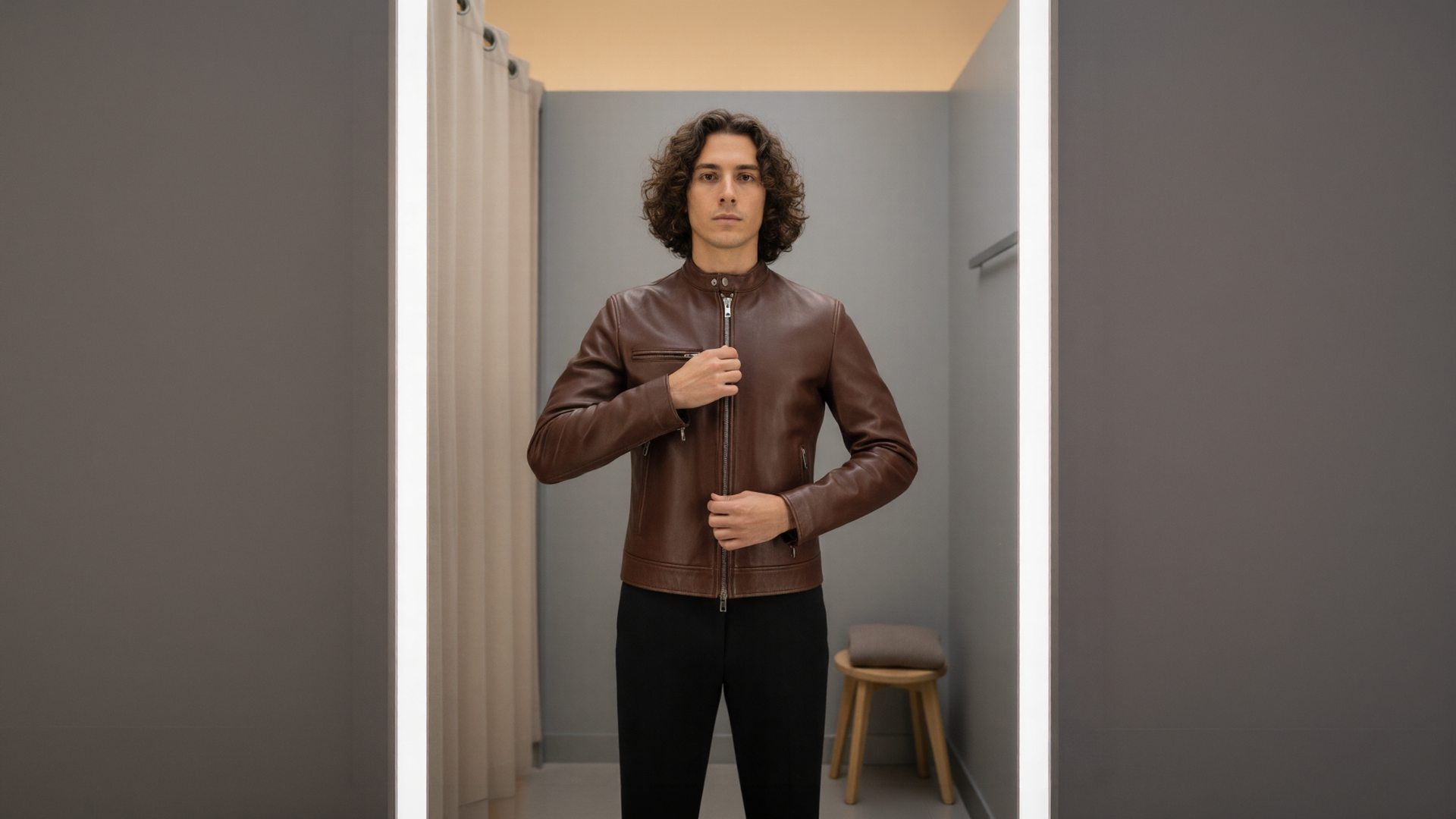
The chest should feel fitted, but not tight. You should have approximately 1 to 1.5 inches of room, allowing you to zip or button the jacket comfortably without pulling or forming X-shaped wrinkles across the front. If the leather strains when fastened, the jacket is too small. If it collapses or folds excessively, it is too large.
Waist and Overall Length
A classic leather jacket should finish around the hip or natural waistline. The waist should gently contour your shape without clinging. A boxy silhouette often signals an oversized fit, while excessive tightness reduces comfort and longevity. Proportion is key. The jacket should enhance your frame rather than overwhelm it.
Do Different Styles Affect How a Leather Jacket Fits?
Yes, different leather jacket styles are designed with distinct fits in mind. Some are intentionally close-cut, while others prioritise comfort and layering.
Snug-Fitting Styles
These styles are designed to sit closer to the body.
Biker or Moto Jackets
Originally engineered for wind resistance, biker jackets feature a close, aerodynamic cut through the shoulders and chest. They are meant to feel structured and sharp.
Café Racers
Minimalist and streamlined, café racer jackets hug the body for a tailored silhouette. They offer a sleek, contemporary profile.
Relaxed-Fitting Styles
These styles allow more room through the torso and waist.
Bomber Jackets
Bombers typically have a roomier chest and waist, often finished with ribbed hems. They prioritise comfort while maintaining shape.
Flight and Field Jackets
These designs are cut more generously and often slightly longer. They are intended to accommodate heavier layers underneath.
Choosing between snug and relaxed depends on the style’s purpose and your personal preference.
How Should a Leather Jacket Fit for Different Body Types?
The ideal fit also depends on body proportions. Selecting the right cut enhances balance and structure.
Athletic Build (Broad Shoulders, Narrow Waist)
Slim-fit biker or café racer styles work well. These naturally taper at the waist and emphasise a V-shaped frame without adding unnecessary bulk.
Slim Build
Structured styles such as bomber or trucker jackets add volume to the upper body. They create visual balance and definition without overwhelming the frame.
Stocky or Broader Build
Field or trucker jackets with clean lines provide space through the chest while maintaining structure. Avoid overly tight styles that restrict movement or exaggerate width.
Petite Build
Cropped biker or asymmetrical jackets help elongate the legs. Shorter lengths prevent the jacket from visually overpowering a smaller frame. The right proportions enhance confidence and longevity.
What Should You Do When Trying On a Leather Jacket?
Trying on a leather jacket properly prevents costly mistakes. Small details matter.
Layer Appropriately
Try the jacket on with the clothing you intend to wear beneath it. If you usually wear a t-shirt, test it with a t-shirt. If you prefer light knitwear, bring that along.
Test Your Range of Motion
Move naturally. Roll your shoulders, bend your elbows, and cross your arms. You should feel secure but unrestricted.
Check the Closure
Always fasten the jacket fully. When zipped or buttoned, it should meet cleanly at the centre without pulling. The fit should feel like a light, comfortable embrace rather than compression.
Leather Jackets Will Fit You in Time
A leather jacket should begin snug and structured, not relaxed. Starting with a close fit allows the leather to soften and adapt naturally, creating a customised silhouette over time. Fit is the single most important factor in ensuring both comfort and long-term appearance.
Be patient during the break-in process. Wear your jacket regularly and allow it to mould to your movements.
If you are deciding where to buy a leather jacket designed to improve with age, Leather Republic focuses on craftsmanship, structure, and premium hides that respond beautifully to wear. Whether selecting a men's leather jacket or a women's leather jacket, choosing the correct initial fit guarantees a jacket that becomes uniquely yours.

Written by BARIS AKSOY